
Why Sticker Price Alone Misleads Los Angeles Homeowners
Most LA homeowners shop for a new AC the same way. They gather a few quotes, compare the bottom lines, and pick the lowest number. That approach can backfire.
A low AC price does not guarantee the system is sized for your home. It does not mean the installation will be done right. It does not promise even cooling in every room. In Southern California, where cooling systems run from spring through fall, small setup problems become expensive fast. A system that short-cycles or runs nonstop wears out sooner and drives up your electric bill.
A better approach is to evaluate total cost of ownership. That includes the purchase price, installation quality, monthly energy use, repair costs over 10 to 15 years, and how comfortable your home actually feels. That full number is what affects your wallet and your quality of life. At Season Control Heating & Air Conditioning, we walk homeowners through this full picture before they commit to any system.
The Hidden Costs Behind a Low Upfront Price
A bargain AC can look appealing on paper. Over a decade of use in the Los Angeles climate, that deal can evaporate if the system is inefficient or poorly installed.
Consider two setups. One carries a lower price tag with basic efficiency. The other costs a bit more but has a higher SEER2 rating. In a region where cooling runs seven or more months each year, that efficiency gap shows up on every power bill. The more efficient system often costs less overall, even though it cost more on day one.
Several factors shape long-term cost. The SEER2 rating determines how much electricity the unit consumes per unit of cooling. Proper sizing prevents the system from being too large or too small for your square footage. Installation quality matters too, including duct connections, refrigerant line work, and airflow balance. All modern systems use R-410A or newer refrigerants since R-22 has been fully phased out.
A rock-bottom quote often means corners are cut on these details. The result can be shorter equipment life, more frequent repairs, noisy operation, and warranty complications.
Comfort, Noise, and Air Quality Most People Forget to Price
Most AC quotes list equipment and labor. They rarely explain how your home will feel room by room once the system is running.
True comfort goes beyond hitting a thermostat setting. It means even cooling from the front bedroom to the back den. It means air that does not feel sticky or bone dry. Zoning, proper duct layout, and balanced airflow are not always visible on a quote sheet, but they define your daily experience.
Noise is another overlooked factor. In dense LA neighborhoods, or in homes with open floor plans and home offices, a loud condenser or rattling ductwork is a real problem. Quieter equipment and thoughtful duct design let your AC fade into the background.
Indoor air quality also matters. When you replace or upgrade an AC, it is a good time to consider better filtration, whole-home air purification, or humidity control. Southern California air carries dust, pollen, and wildfire smoke during certain months. A well-designed system can address those issues at the same time it cools your home.
How Sizing and Installation Quality Affect Your Investment
An oversized AC cools fast but shuts off before it removes enough humidity. An undersized unit runs constantly and never quite catches up. Both waste energy and shorten equipment life.
Proper sizing starts with a Manual J load calculation. This accounts for your home's square footage, insulation, window placement, ceiling height, and local climate data. The San Fernando Valley, coastal areas near Santa Monica, and inland Orange County all have different cooling demands. A one-size approach does not work.
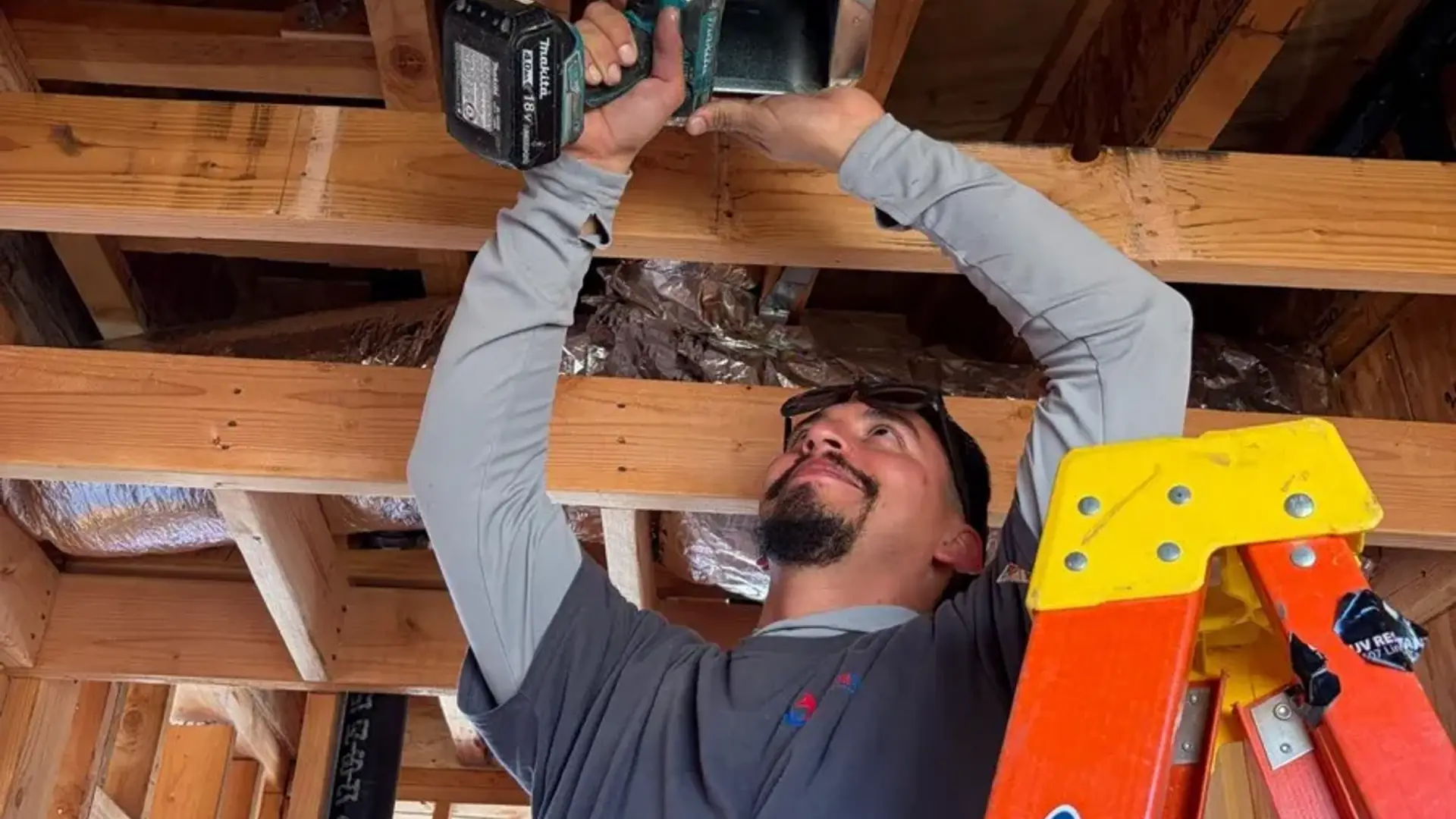
Installation quality is equally important. Duct connections need to be sealed and insulated. Refrigerant charge must be exact. The outdoor unit needs adequate clearance and a level pad. Electrical connections must meet current code. When these details are handled correctly, the system runs at the efficiency the manufacturer intended. When they are rushed, performance drops from day one.
Season Control Heating & Air Conditioning serves Greater Los Angeles, the San Fernando Valley, Ventura County, and Orange County. Our technicians follow manufacturer specifications on every install. Call us at (818) 275-8487 to schedule a proper assessment before you commit to any quote.
How to Compare AC Quotes the Right Way
When you have two or three quotes in front of you, resist the urge to compare only the final dollar amount. Instead, check for these details.
First, confirm that each quote includes a load calculation. If a contractor quoted a system without measuring your home, that is a warning sign. Second, compare SEER2 ratings across quotes. A higher rating means lower operating costs over time. Third, ask what is included in the installation. Does the quote cover new ductwork modifications, a new thermostat, permits, or post-install testing?
Fourth, look at warranty terms. Some manufacturers require specific installation practices for the warranty to remain valid. If the installer skips those steps, you could lose coverage on a major component. Fifth, ask about post-installation support. Will the company return for a follow-up check? Do they offer maintenance plans?
A thorough quote may not be the cheapest, but it should be the most transparent. The goal is knowing exactly what you are paying for and what you can expect once the system is running through a full Los Angeles summer.
Frequently asked questions
What is total cost of ownership for an AC system?
Total cost of ownership includes the purchase price, installation costs, monthly energy bills, maintenance, and repairs over the life of the system. In Los Angeles, where cooling runs most of the year, operating costs often exceed the original purchase price within a few years.
Why does AC sizing matter so much in Southern California?
An oversized unit cycles on and off too quickly, wasting energy and leaving humidity behind. An undersized unit runs nonstop and cannot keep up on hot days. Proper sizing through a Manual J load calculation matches the system to your home's specific needs and local climate conditions.
What SEER2 rating should I look for in a new AC?
For Southern California homes, a SEER2 rating of 15 or higher is a good starting point for meaningful energy savings. Higher ratings cost more upfront but reduce monthly electric bills. Your ideal rating depends on how many months you run your system each year.
How can I tell if an AC quote is cutting corners?
Watch for quotes that skip a load calculation, do not specify the SEER2 rating, exclude permits, or bundle vague line items. A reliable quote details the equipment model, installation scope, warranty terms, and any modifications needed for ductwork or electrical connections.
Does Season Control serve my area?
Season Control Heating & Air Conditioning serves Greater Los Angeles, the San Fernando Valley, Ventura County, and Orange County. Call (818) 275-8487 to schedule a consultation or request a detailed quote for your home.
Need help with your HVAC system?
Season Control serves Greater Los Angeles, San Fernando Valley, Ventura County, and Orange County.
Schedule service